Origin Story
How DAI Started
Five years of BPMN diagrams, a surprising experiment with LLMs, and the realization that structure matters more than the model itself.
DAI Studio is a visual platform for structuring the context you feed into large language models.
Work with .dai files
to get more accurate, predictable results — across any model.
A tool built for engineers who want more from their language models.
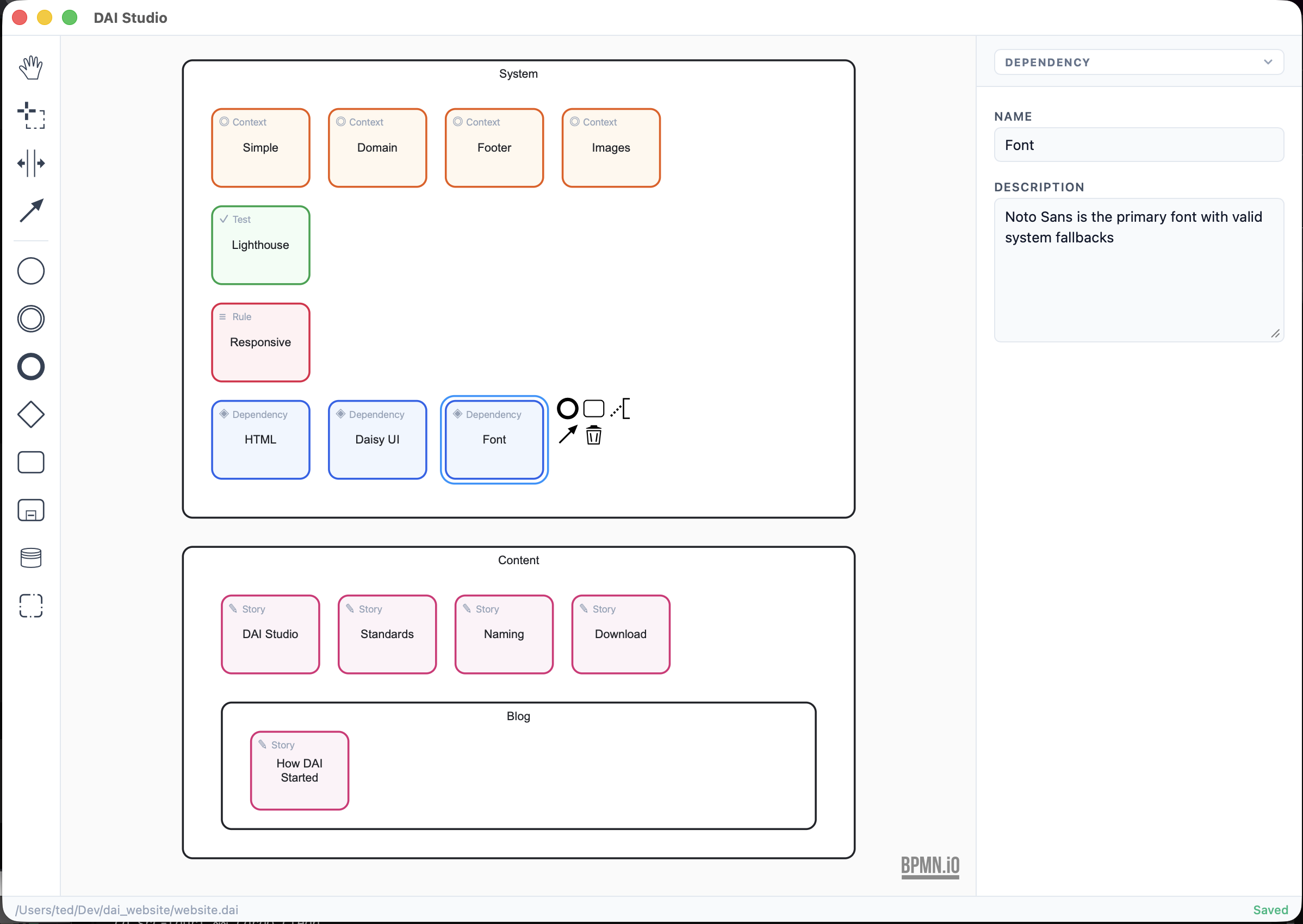
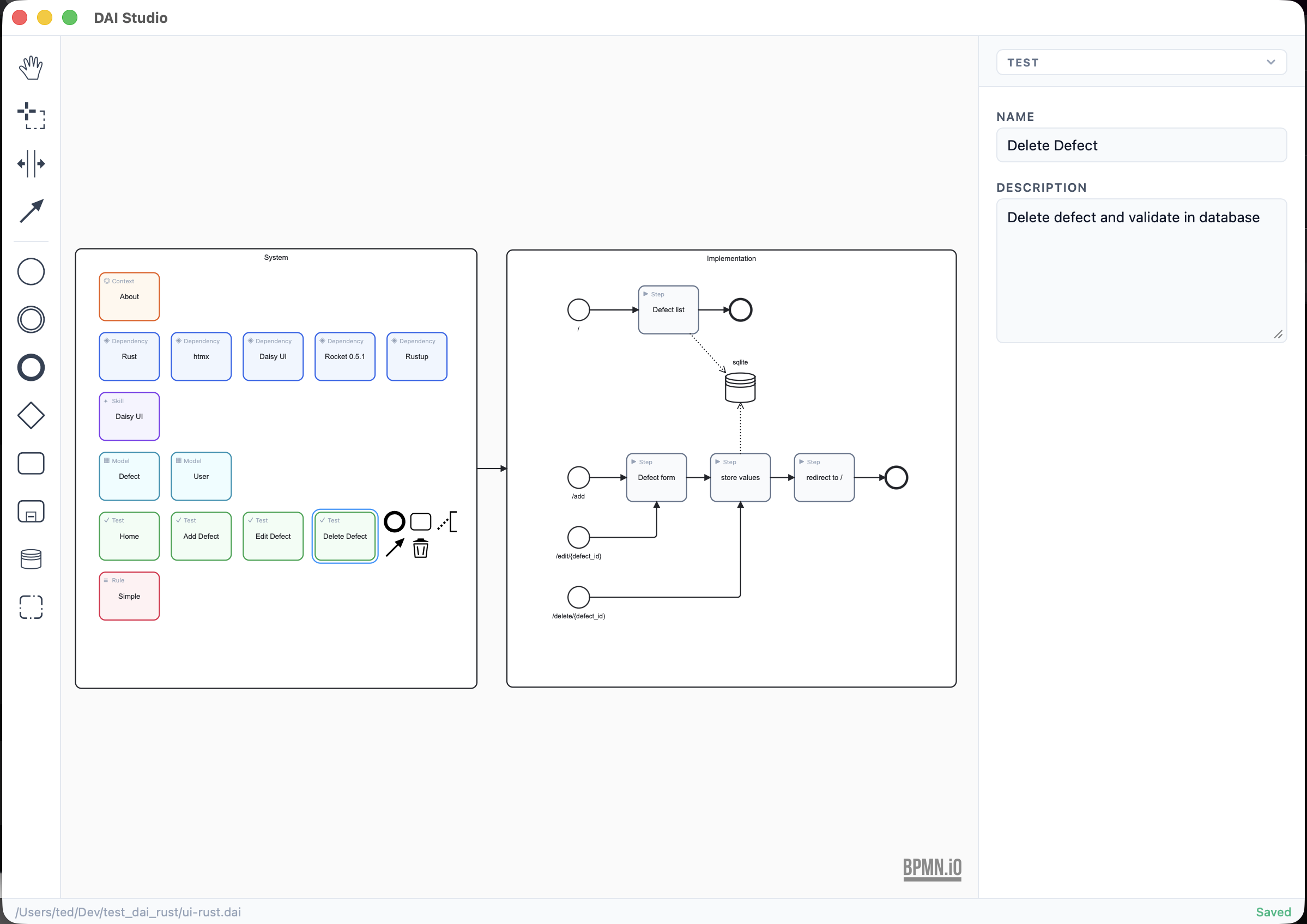
Arrange and connect your context visually. See the full picture of what you are feeding into your model before it runs.
Structured context means structured output. DAI helps you engineer inputs with the same precision a die creates identical parts.
Works with any LLM. Whether you use GPT-4, Claude, Gemini, or a local model, well-structured context improves every one.
Free to download. Available for all major platforms.
Version 0.4.4 — Released 5 April 2026
macOS
Download for Mac (ARM DMG)
Windows
Download for Windows (x64 MSI)
Linux
Download for Linux (Debian/Ubuntu AMD64)
Linux
Download for Linux (RPM X86_64)
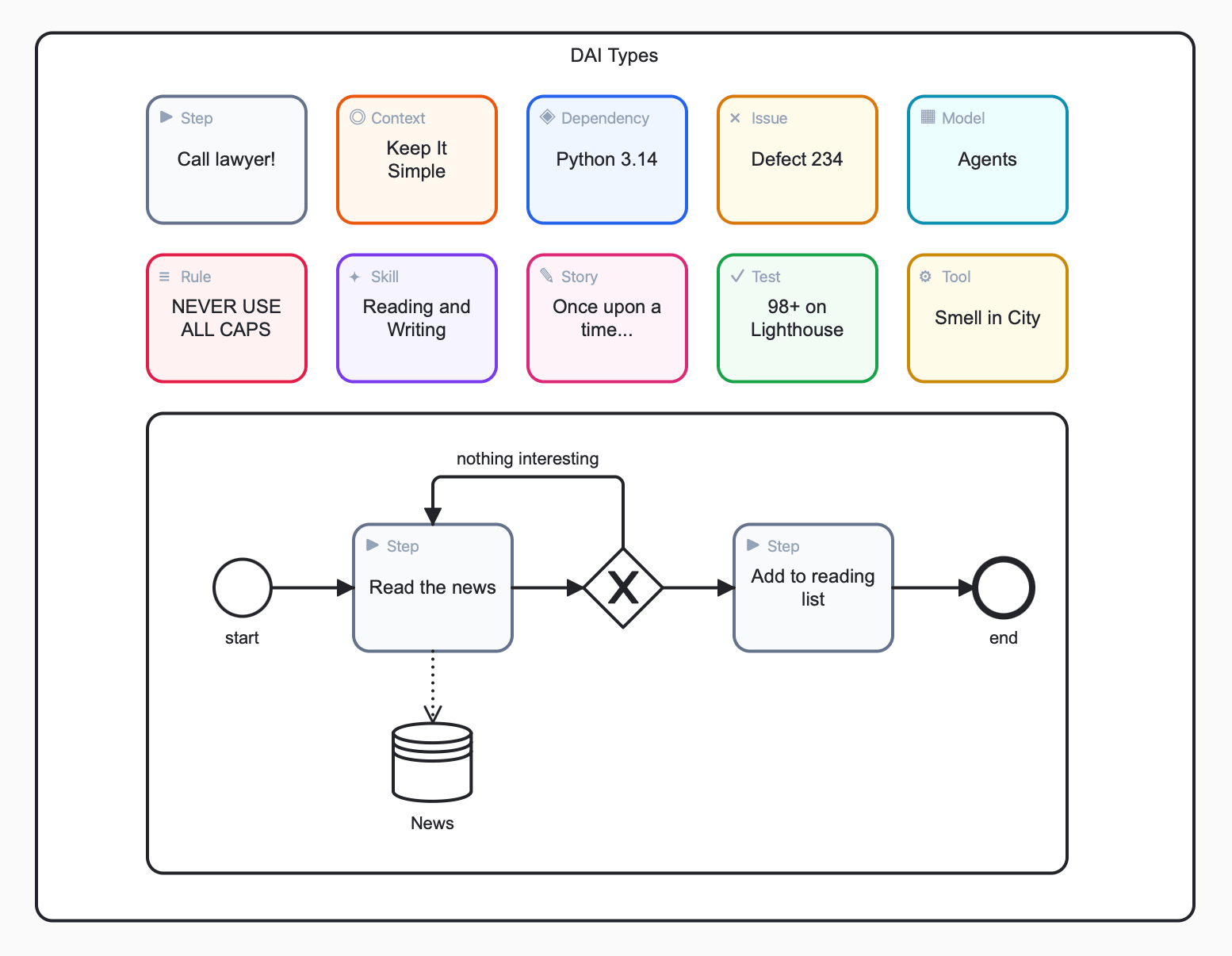
DAI extends the Business Process Model and Notation (BPMN) standard — a widely adopted, XML-based language for describing workflows and processes.
LLMs are trained on internet data and natively understand markup languages. By leveraging BPMN as a foundation, DAI taps into that familiarity, giving models richer structural signals and producing stronger, more consistent output.
Your context lives in
.dai files —
portable, version-controllable, and readable by any text editor.
The name draws from die manufacturing — the precision engineering discipline behind products like Lego bricks. A die is a specialised tool engineered to extremely tight tolerances, capable of producing identical, high-quality outputs at scale with exceptional consistency.
DAI Studio applies that same philosophy to AI: just as a physical die ensures every brick snaps together perfectly, DAI provides a structured mould for context — enabling you to shape LLM inputs with precision and repeatability.
In Japanese, 大 (dai) often means "big" or "great" — as in daisuki (to really love something). A fitting double meaning for a tool that aims to produce great output.
Five years of BPMN diagrams, a surprising experiment with LLMs, and the realization that structure matters more than the model itself.